States of matter: Basics
Check out this PhET simulation on states of matter to explore how the particles behave during changes of state.
Matter is dynamic in nature. Explore how it undergoes physical and chemical changes, including transformations between different states such as melting, freezing, and evaporating.
A physical change is when the substance changes its physical appearance or state without affecting its chemical identity. Examples of physical changes include:
When a substance converts from one physical state to another, this is known as a change of state. Let's look at changes of state using water as an example.
Water is one of the few substances that can exist in all three states: solid ice, liquid water, and gaseous steam or vapour. The process of state changes have different names depending on which states are involved.
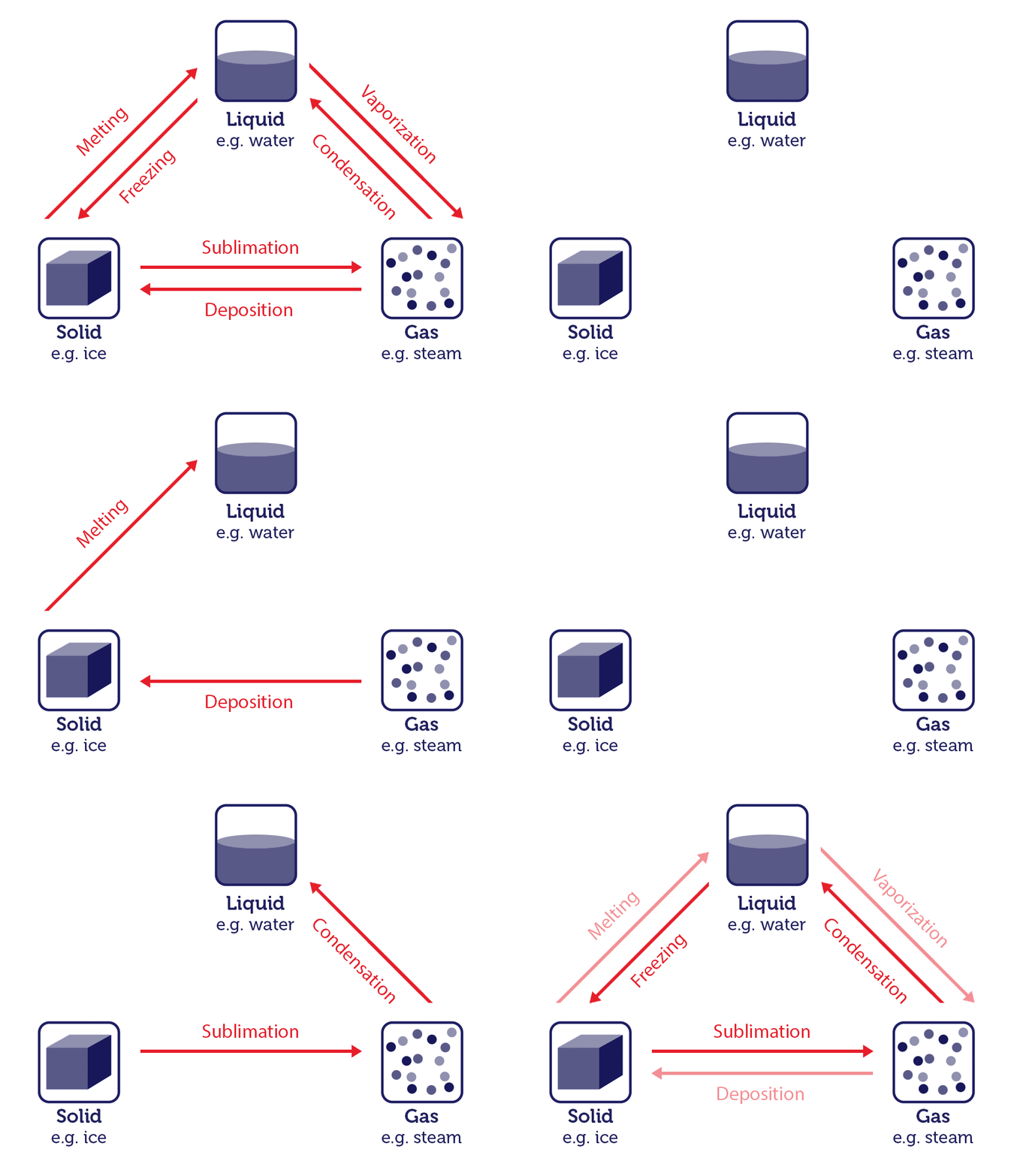
Changing states of matter image, by RMIT, licensed under CC BY-NC 4.0
A chemical change is when a substance changes its chemical identity or composition. It involves the formation of new substances that have different properties compared to the original substance. Examples of chemical changes include:

The Yaegl Peoples of the Coffs Harbour region of New South Wales heated Melaleuca spp. (tea tree) leaves, which contain oils with medicinal properties. By applying heat, the liquid oil can be extracted into a vapour or gas. This vapour is then breathed in to treat respiratory conditions.
The Ngarrindjeri Peoples of the Murray River region in South Australia used steam released from wet plant material, and the Anindilyakwa Peoples of Groote Eylandt and Bickerton Island in the Gulf of Carpentaria extracted vapours from Calytrix (fringe myrtle) to relieve head colds.
Melaleuca leaves image, by Geoff Derrin via Wikimedia Commons, licensed under CC BY-SA 4.0

Stephanie Beaupark is a Ngugi researcher and Associate Lecturer in the School of Geography and Sustainable Communities at the University of Wollongong. Her work involves extracting Australian Indigenous dyes from eucalyptus leaves to understand how the colours of the dyes change with the seasons. These coloured substances are released when the leaves are boiled.
Stephanie’s research helps us understand the weather cycles in the Sydney Basin, and connect chemistry with Indigenous ways of being and forming new knowledges.
Eucalyptus leaves image, by PublicDomainPictures via Pixabay
Test yourself on your understanding of physical and chemical changes.


RMIT University acknowledges the people of the Woi wurrung and Boon wurrung language groups of the eastern Kulin Nation on whose unceded lands we conduct the business of the University. RMIT University respectfully acknowledges their Ancestors and Elders, past and present. RMIT also acknowledges the Traditional Custodians and their Ancestors of the lands and waters across Australia where we conduct our business - Artwork 'Sentient' by Hollie Johnson, Gunaikurnai and Monero Ngarigo.
More information